
Water in Diesel
AI Generated
Causes, damage and the right filter solutions for your customers
Water in fuel is one of the most common, most costly and easiest-to-prevent
causes of engine failure in diesel engines. For dealers, installers and system integrators who want to offer their customers complete engine protection, sound knowledge of this topic is essential—both for consulting and for choosing the right products.
This article explains how water gets into the fuel circuit, which damage mechanisms it triggers, and which SEPAR filter solution is the right choice for which application for your
customers.
How water gets into the fuel
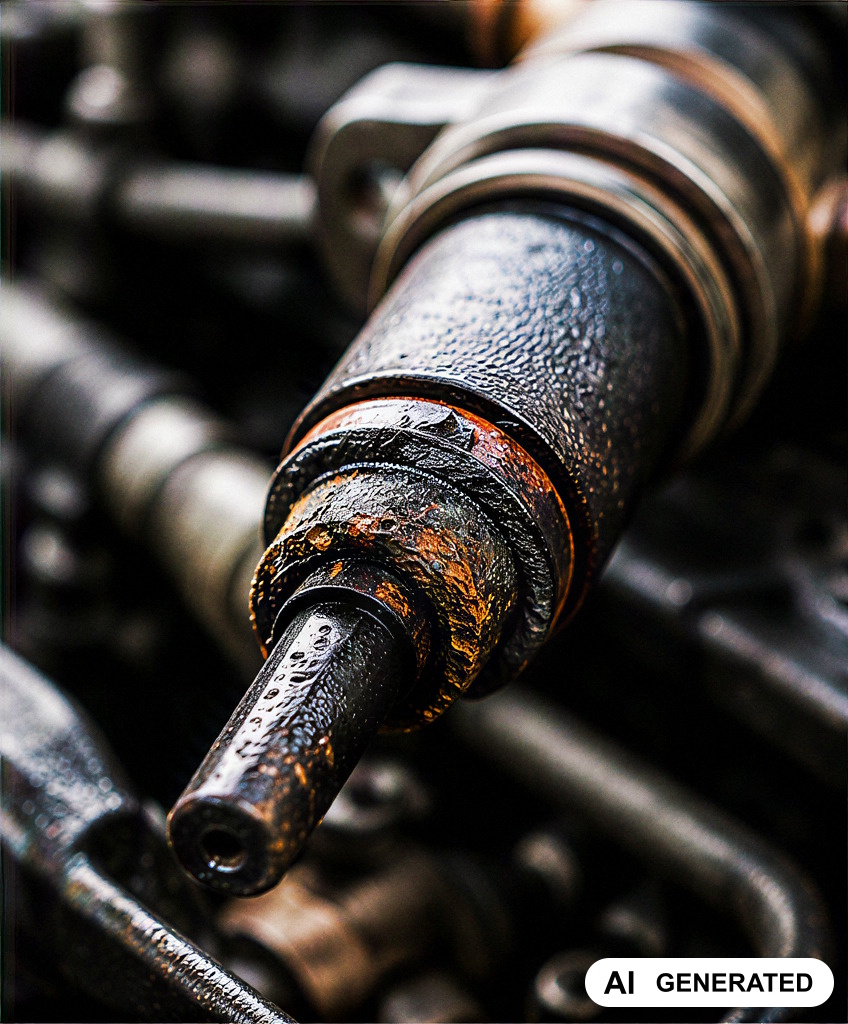
Water in the fuel system is not an isolated case—it is a systematic load that almost all diesel engines are exposed to. The sources of ingress vary depending on application and operating location, but their effect is identical: water enters the injection system and causes damage there.
Condensation in Fuel Tanks
The most common ingress mechanism is condensation. Tanks that are not completely filled contain an air cushion. When temperatures fluctuate, the
humidity in that air condenses on the cool inner tank wall and collects at the bottom. Machines with long downtimes are particularly affected: generators, seasonal vehicles, depot locomotives and ships in port.
Contamination via the fuel supply chain
Water ingress also occurs during bunkering or refuelling—from poorly maintained storage tanks, bunker boats or tank trucks. Standard-compliant fuel qualities to ISO 8217 or EN 590 limit the permissible water content, but in practice deviations are not uncommon. For your customers in shipping, commercial vehicles or agriculture, this is a real, recurring risk.
Hygroscopic fuels: biodiesel
As alternative fuels become more widespread, the water risk continues to grow. HVO and biodiesel blends are significantly more hygroscopic than conventional mineral diesel—they actively bind water from the ambient air. For your customers who have already switched to HVO or are planning to do so, this can mean that the requirements for the filtration system increase.
Leaks and direct ingress
Defective tank caps, damaged vent lines or old seals allow rainwater or splash water to enter directly. Older machines and vehicles operated outdoors are particularly affected—typical in construction, agriculture and
marine applications.
The 4 main sources of ingress at a glance:
Condensation due to temperature fluctuations—especially during long downtimes
Contaminated fuel deliveries from poorly maintained storage systems
Hygroscopic biofuels (FAME, B7+) with active water absorption
Defective seals, tank caps and vent lines on older machines
What water does in the injection system
Free and emulsified water in fuel is not a harmless contamination. It sets a cascade of damage mechanisms in motion that, in extreme cases, can mean complete engine failure. For your customers—whether farmer, shipowner or infrastructure operator—this is a question of operational reliability and operating costs.
Corrosion on precision components
Water can promote corrosion processes on metallic components of the fuel and injection system. Sensitive precision components in particular can be impaired in function and service life as a result.
Cavitation due to water evaporation
When pressure drops or temperatures rise in the injection system, water evaporates explosively. The resulting vapour bubbles implode when higher pressures are reached again and cause cavitation damage to metal surfaces. Modern high-pressure injection systems with system pressures above 1,500 bar are particularly affected—repair costs can be significant.
Microbiological Growth
The boundary layer between the water and fuel phases creates ideal living conditions for bacteria and fungi, especially the so-called diesel fungus (Hormoconis resinae). It forms tough biomass that clogs filters, as well as organic acids that cause further corrosion and seal damage. For customers with long tank dwell times—generator operators, seasonal machine pools—this is particularly relevant.
Fuel quality deterioration
Water accelerates the oxidation of fuel components and promotes the formation of resin compounds and sediments. These clog filter elements prematurely and can partially block injection nozzles—with direct consequences for engine performance, fuel consumption and
emissions.
Many complaints about supposedly defective injection systems or prematurely worn filter elements have one common cause—water in the fuel. Anyone who recommends a reliable water separator to their customers sustainably reduces complaints, service call-outs and warranty issues.
Which SEPAR system protects which application?
SEPAR offers different fuel filter systems for different applications and requirements. Selecting the right system depends, among other things, on the application, fuel system, required flow rate, installation situation and the respective operating conditions. The following overview provides an initial look at possible areas of use for the various SEPAR systems.
| Anwendung Ihres Kunden | Empfohlenes SEPAR-System | Optionales Zubehör |
|---|---|---|
| Traktoren & Landmaschinen | LKF-Automotive / LKF-Industrial / LKF-Automotive HD / SWK / EVO | WSA, LKH, HFP |
| LKW & Nutzfahrzeuge | LKF-Automotive / LKF-Automotive HD / LKF-Industrial / SWK / EVO | WSA, LKH, HFP |
| Generatoren & Notstrom | LKF-Automotive / LKF-Automotive HD / LKF-Industrial / SWK / EVO | WSA, LKH, HFP |
| Baumaschinen & Off-Highway | LKF-Automotive / LKF-Automotive HD / LKF-Industrial / SWK / EVO | WSA, LKH, HFP |
| Diesellokomotiven & Schiene | SWK / SWK Doppelsystem | WSA, HFP |
| Schiffe & Marine (kommerziell) | SWK / SWK Doppelsystem | WSA |
Free vs. emulsified water: what your customer should know
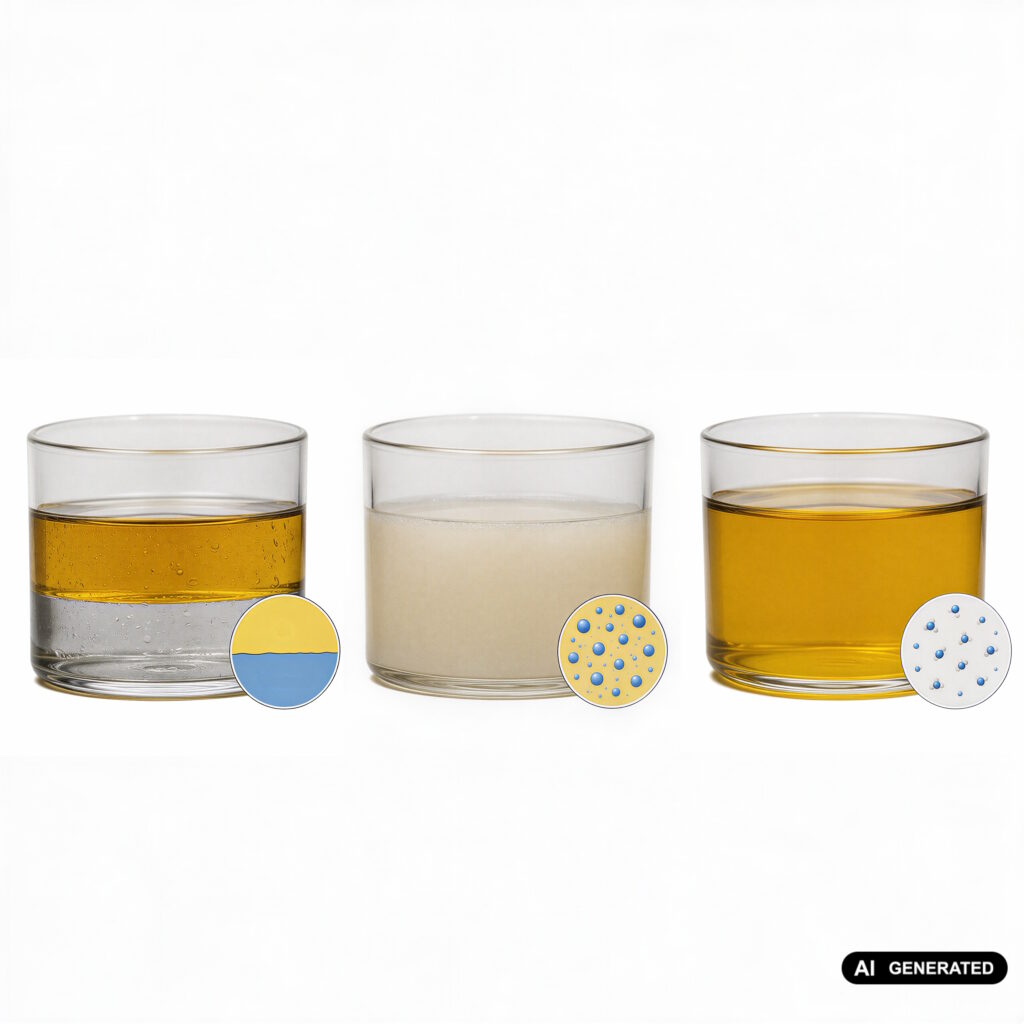
In practice, three forms of water occur in fuel, which place different requirements on the filtration system:
Free water
Free water settles as a visible phase at the bottom of the tank and can be seen with the naked eye or through the transparent bowl of a SEPAR filter. It is mainly caused by condensation and direct ingress. The SEPAR SWK separates free water with a separation efficiency of 99%.
Emulsified water
Emulsified water is finely dispersed in the fuel and can be recognized as a cloudy phase. It is caused by mechanical effects (vibrations, pump pressures). SEPAR LKF systems with the coalescing principle separate both free and emulsified water with an overall separation efficiency of over 95%.
Dissolved water
This is not critical as long as it does not precipitate out of the diesel as free water due to temperature fluctuations or exceeding the saturation limit.
Selection criteria: The appropriate SEPAR system should be selected based on the specific application and technical requirements. Key factors include the required flow rate, installation situation, operating conditions and, where applicable, existing approval or
classification requirements.
Optional accessories: more protection, less service effort
In addition to the main filter systems, SEPAR offers accessories that increase protection and minimize maintenance effort for your customers:
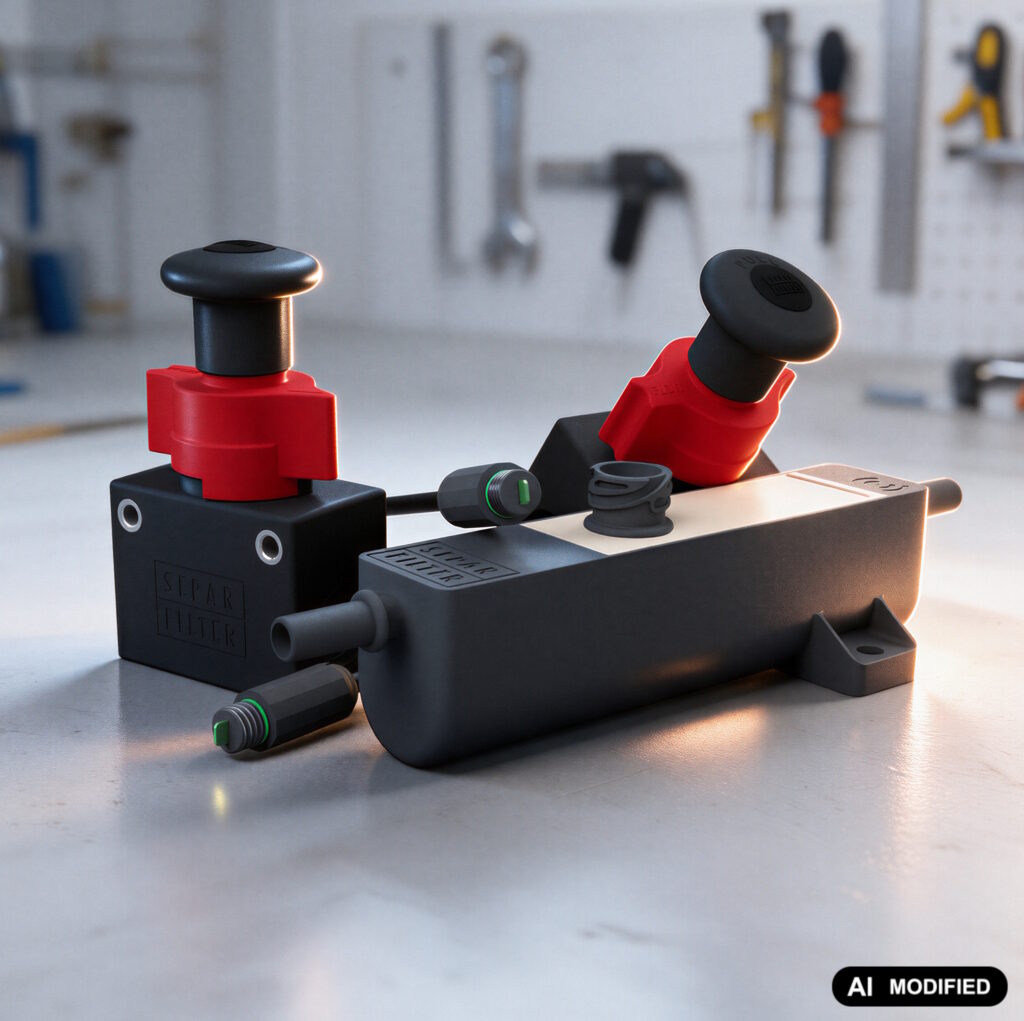
- SEPAR WSA (Water Sensing Alarm): Optional sensor that detects water in the fuel at an early stage and outputs a signal—retrofit for all SEPAR systems. Ideal for machines that are not checked daily.
- SEPAR HFP (manual priming pump): Bleeds the fuel system easily and without tools after a filter change. Reduces starting problems after maintenance and protects the engine from cranking attempts with air pockets.
- SEPAR LKH (fuel heater): Prevents paraffin-related filter clogging in winter.
Can be combined with LKF, SWK and EVO systems, retrofit as a standalone component. An integrated heater is also available for certain SWK versions.
Which SEPAR system protects which application?
SEPAR offers different fuel filter systems for different applications and requirements. Selecting the right system depends, among other things, on the application, fuel system, required flow rate, installation situation and the respective operating conditions. The following overview provides an initial look at possible areas of use for the various SEPAR systems.
| Ohne SEPAR-Filtration | Mit SEPAR-Filtration |
|---|---|
| Korrosionsschäden an Einspritzsystem: hohe Reparaturkosten | Wasser wird abgeschieden, bevor es Schaden anrichten kann |
| Vorzeitig verschleißende Hauptfilter durch Wasser- und Partikelbelastung | Längere Filterstandzeiten durch sauberen Kraftstoffeintrag |
| Ungeplante Stillstandzeiten durch Motorausfall | Zuverlässiger Betrieb auch bei schwankender Kraftstoffqualität |
| Mikrobiologische Verkeimung im Tank: aufwändige Reinigung | Frühzeitige Wasserabscheidung verhindert Keim-Nährboden |
| Höherer Kraftstoffverbrauch und Emissionen durch Ablagerungen | Saubere Einspritzdüsen, optimale Verbrennung |
Conclusion: Water protection is not an accessory—it is basic protection
Water in fuel is not a rare special problem, but an ever-present load for every diesel engine in every industry. As a dealer, installer or system integrator, you can offer your customers the most effective engine protection by positioning fuel filtration not as optional accessories, but as an integral part of every diesel system.
SEPAR offers the right solution for every application and every flow range: from the compact coalescing filtration of the LKF to the proven 5-stage filter principle of the SWK and EVO, right through to the redundant changeover system for safety-critical infrastructures. Made in Germany, HVO- and biodiesel-resistant, with optional accessories for every service need.
CONTACT
The Right SEPAR Filter for Tractors and Agricultural Machinery
Our specialists will advise you on the appropriate SWK configuration for your application—free of charge and without obligation.
Phone and Fax
Tel.: +49 2324 9460-0
Fax: +49 2324 40842
You can find us here
Am Walzwerk 2
45527 Hattingen
Germany